
NIAPN’s response to the draft Disability Strategy
12 March 2026
By Becca Bor
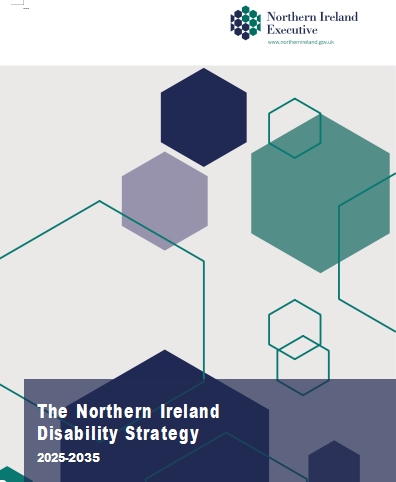
The Executive’s draft Disability Strategy is open for consultation. NIAPN has prepared a response to highlight the lived experience of Deaf and Disabled People experiencing poverty. Feel free to use this response in part or in whole as part of your own consultation response. We encourage everyone to respond. The consultation closes on 20 March, 2026.
NIAPN’s response:
NIAPN supports the overall vision laid out in the Executive’s Disability Strategy for “An inclusive society that respects, protects promotes and fulfills the rights of all Deaf and disabled people to participate fully, free from discrimination”.
NIAPN is concerned, however, that the Disability Strategy in its present form, without an action plan, clear SMART targets, and funding will not be able to achieve this vision.
“Nothing About Us Without Us” – Voice of Deaf and Disabled People
NIAPN has heard the hurt reflected by many within the Deaf and Disabled community, including many of those who were on the Department’s own expert advisory panel and co-design group. NIAPN signed and supported the open letter to Executive Ministers calling on them to urgently rethink their approach to the Disability Strategy.
“The Strategy was an opportunity to work with Deaf and Disabled people to address the barriers we face daily in our lives. The draft Strategy is a massive disappointment. It has been developed without input from Deaf and Disabled people and it’s 58 commitments will fail to deliver any meaningful change to our lives or advance our rights as citizens. We feel devalued and disillusioned by the Executive and believe no strategy is better than this strategy.”
NIAPN agrees with Disabled People Against the Cuts (DPAC) that the “commitment to create a Regional Disability Forum of Deaf and Disabled people is positive. However, given the lack of engagement with Deaf and Disabled people to date, we believe there are questions about the commitment of the Executive to genuine co-production going forward. We also question the value of such a forum if it’s role to help deliver the current draft Strategy.”
We also agree with disabled people’s organisations that the involvement of Deaf and Disabled people is key to developing and delivering an effective Disability Strategy. With them, we call for an ambitious approach to engagement which embeds General Comment 7 of UNCRDP into future co-production. This must include the involvement of Deaf and Disabled people in deciding the role, remit and membership of the proposed Regional Disability Forum as well as identifying other mechanisms to promote and embed our participation in the work of the Executive.
Poverty and disability
Outcome 30 states “We will align with and complement the implementation of the Executive’s Anti-Poverty Strategy”. However, without SMART targets and actions it is unclear what this means.
There is not enough focus throughout the draft Disability strategy on the disproportionate rates of poverty for Deaf and Disabled people, nor is there a prioritisation on clear actions to tackle poverty experienced by Deaf and Disabled People.
Poverty is both a cause of disability – you are more likely to acquire a disability if you are living in poverty, and it is a result of disability – you are more likely to be living in poverty if you have a disability (UN, 2024).
At the last census, 24% of the population, or 460,000 people, in NI reported having a limiting long-term health problem or disability. Individual disabled people are considerably more likely to be living in poverty than non-disabled people and households with a disabled person are similarly more likely to be in poverty.
30% of disabled children experience poverty compared to 24% of non-disabled children; 37% of working age adults experience poverty compared to 13% of non-disabled working age adults; and 17% of pensioners compared to 15% of non-disabled pensioners. (JRF, Poverty in NI 2005 report)
These figures are most likely a significant under-estimation of true poverty rates amongst Deaf and Disabled households, as poverty indicators measure income and are not adjusted for the high costs associated with living with a disability.
High rates of poverty for disabled people is due to a confluence of structural inequalities that need to be addressed through this Strategy. The additional costs of disability – which mean a much higher cost of living for those with a disability – is not adequately taken into account.
Scope UK research found that in 2025 a disabled household needs an extra £1,095 each month on average to have the same standard of living as a non-disabled household. With inflation, the extra cost of disability is estimated to reach £1,224 per month by 2029 to 2030 financial year. This is in line with what the government in the Republic estimated the cost of disability is in that jurisdiction, which in 2020 was around 1,100 euro a month (Dept of Social Protection, 2021).
Disabled households have to use a large part of their income to pay for specialist products and services, as well as pay more for the basics. Besides having to buy specialist equipment, mobility aids, home adaptations etc, most disabled households have to spend far more on heating to prevent their disabled family member becoming hypothermic. They are also forced to pay more for accessible transport options, using taxis etc.
Whilst the Scope research is UK-wide, there are further inequalities that drive up costs for Deaf and Disabled people in NI, such as lack of access to free public transport and a much poorer public transport infrastructure in general, higher dependence on unregulated home heating oil, higher rates of rurality, higher prices for certain assistive technologies here than in GB, to name a few.
Personal Independence Payment (PIP) is meant to help address this inequity, but it falls short. The average PIP payment is £465 a month, not enough to cover their extra costs of £1,095 per month, leaving a £630 shortfall. By 2030, the estimated shortfall will reach £704 (Disability Price Tag 2025 report, Scope). And it must be recognized that many Deaf and Disabled people do not qualify for PIP, although they had been in receipt of Disability Living Allowance before that benefit was abolished.
Furthermore, DPAC have noted that “Deaf and Disabled people in Northern Ireland are at a disadvantage compared to counterparts in other parts of the UK:
“Deaf and Disabled people in Northern Ireland do not enjoy parity with counterparts in the rest of the UK in key areas. For example: we do not have the same level of rights protections; access to Direct Payments lags behind the rest of the UK, denying Disabled people the same opportunity to live in the community.
Deaf and Disabled people have been experiencing regression as a result of measures implemented by the Westminster government. For example, as a result of the Universal Credit Act, an additional 50,000 Deaf and Disabled people will be pushed into poverty across the UK by 2029-2030.”
Child Poverty
NIAPN shares the concern that other Children’s disability charities, such as Family Fund, have that there wasn’t a decision made to adopt a life-cycle approach which would separate policies, as the Scottish model does, into children’s disability, transition to adulthood and adult disability.
We have concerns that in not separating the policy disabled children and young people are yet again forgotten about and are a last-minute addition, rather than integral to an approach that invests heavily in our disabled children. Disabled children struggle to meet their full potential and will grow into disabled adults who require a greater level of care in adulthood and beyond than they might have done had they had the therapeutic and educational inputs that they deserve.
Households with disabled children tend to experience higher levels of poverty because of the increased cost of caring and educating a disabled child. Many families do not have the option to return to/ stay in work due to a lack of appropriate childcare settings and flexible working arrangements. Often, increasing work hours is not a viable option out of poverty for parent carers of disabled children.
The state of our Special Educational Needs provision is woefully inadequate, with some young people denied their right to education at all due to lack of a suitable placement. Additionally, the proposals to cut one-to-one classrooom support for statemented children, flies in the face of the stated goal to “ensure that Deaf and disabled children are visible, included and can participate fully in education through delivery of a new Special Educational Needs Framework” (Outcome 52)
There must be measureable, targeted actions to address the lower educational qualification levels among disabled persons in NI compared with other regions in the UK. In 2021, for example, 25% of disabled people in Northern Ireland obtained no qualifications compared to England, where it was only 12% (ONS, 2022).
This can be understood as potentially related to both systemic educational issues for those with Special Educational Needs and disability, alongside a fragile employment support environment that is under significant financial strain. Students with additional needs or disability frequently leave school without the work readiness skills that employers expect, and employers are often ill-equipped to support them fully. (JRF Poverty in NI 2025)
Employment
The disability employment gap in Northern Ireland is 38% (Department for Work and Pensions, 2025). That means that 83% of people without a disability are in employment, but only 45% of people with a disability are employed. (JRF Povety in NI 2025 report)
Whilst the Disability Strategy’s outcome 42 states “We will implement a new Disability and Work Strategy in meaningful partnership with Deaf and disabled people and stakeholders” it is unclear at this point what actions will be taken within these two strategies to address the disability employment gap or the disability pay gap.
It must be stressed, however, that research, such as Dr. Olsen’s examination of barriers to employment for Deaf and Disabled people in NI, indicates the main reason more Deaf and Disabled people are not in paid employment is because employers are loath to employ them. Therefore, without a focus on employers, the Disability and Work Strategy is unlikely to be successful.
As JRF reports:
“We know that people with a disability in the workforce are often affected by low pay and job insecurity. One-third of working disabled people work part-time in Northern Ireland, compared to under one-fifth in the UK (Ulster University Economic Policy Centre, 2022). These factors often make it difficult to depend on work as a route out of poverty or make disabled people more likely to fall into poverty if an unexpected cost, illness or other changes in their circumstances emerge.
Importantly, too, disabled people in work (13%) are more likely than non-disabled people (9%) to be self-employed (Navani et al., 2023). This means they do not receive Statutory Sick Pay (SSP) and therefore are reliant on personal savings or private insurance for income when they cannot work due to illness.”
All of this means that the living standards of disabled people are much lower than non-disabled people. The Resolution Foundation found that the gap in median household income between adults with a disability (£21,405) and without (£27,766) was 30 per cent in 2020-21, but this comparison included the income from disability benefits. When they excluded that income – on the grounds that it is intended to compensate for the additional costs of having a disability, even if only partially – then the gap rose to 44 per cent.
Overall, they found a very clear relationship between disability and incomes, with people with disabilities having lower household income across the distribution. At the bottom end of the income distribution, income at the 25th percentile of disabled people (£11,915) is 34 per cent below income at the 25th percentile of non-disabled people (£18,146).
Therefore, the Disability Strategy needs robust and ambitious actions to place, train, and support Deaf and Disabled People into work; and supplement low incomes and support those whose circumstances change and need flexibility.
At the time of this consultation, the cuts to the UK Shared Prosperity Fund as it is replaced by the Local Growth Fund do not inspire confidence that employment and training support for Deaf and Disabled People and the charities that support them will be supported.
Conclusion
In conclusion, NIAPN urges the Minister to put poverty at the heart of the Disability Strategy. Given the extent to which disabled people face poverty, this is vital if the Disability Strategy is to make a real difference to Deaf and Disabled people and make Northern Ireland “an inclusive society that respects, protects promotes and fulfills the rights of all Deaf and disabled people to participate fully, free from discrimination”.
References:
Dept of Social Protection (2021), The Cost of Disability in Ireland – Research Report, Dublin
JRF (2025), Poverty in Northern Ireland, Joseph Rowntree Foundation, Belfast and York.
Scope (2025), Disability Price Tag 2025, London
United Nations (2024). Factsheet on Persons with Disabilities. Department of Economic and Social Affairs Disability. https://www.un.org/development/desa/disabilities/resources/factsheet-on-persons-with-disabilities.html
Olsen, J (2022): Employers: influencing disabled people’s employment through responses to reasonable adjustments, Disability & Society, DOI: 10.1080/09687599.2022.2099251
El Dessouky, O & McCurdy, C., (2023) Costly differences: Living standards for working-age people with disabilities , London, Resolution Foundation
Contact Becca Bor with any questions or comments about our response or any queries about references.